Open Studio

clips and tips from the largest, most prolific community television studios on the planet: manhattan neighborhood network

Monday, September 25, 2006

TV 81 THIS YEAR

The medium of television marks a milestone in 2006: its 81st birthday.
Late in 1925, a failed Scottish inventor working alone in a tiny London attic apartment developed the first practical television system (read: it worked). Few recognize the name John Logie Baird, but he was the first to demonstrate a working television system - camera, transmitter, and receiver/display.
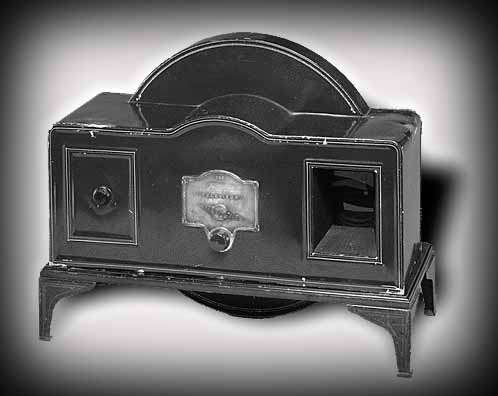
Two years later he was making video recordings that can be viewed today.
Television had been speculated about since the mid 1800’s, decades before actual motion pictures or radio. In 1886, one Paul Nipkow, who apparently did little follow up on his Nipkow Disk, patented this key element in Berlin. The disk was further developed into an accurate scanning device, so that facsimiles of documents (faxes) could be transmitted from city to city - hundreds per hour to Paris offices by 1900. In Wales, mug shots and sketches of suspects were being sent ‘wireless’ to remote police stations by 1912.
But the triple problem of capturing live movement (camera), sending that dynamic image electronically (transmitter), and reproducing that moving image (‘TV set’) had never quite been solved when Baird decided to tackle the problem.
Baird was an inventor with no formal training as a scientist, tech school rather than university educated. The research and development on his ‘Televisor’ was a solo job: no assistant, virtually no funding, no libratory, no support from the scientific or academic community and no affiliation with any institution.
He had a dubious track record as an experimenter. As head engineer at Glasgow, Scotland’s only power plant, he caused a blackout of the entire city when he sent a huge amount of electricity into a vat of wet cement. Instead of the diamonds he had attempted to synthesize, he got hot, wet cement - and a pink slip. Utilizing the mechanical scanning principle of the Nipkow Disk, Baird cobbled together a camera and receiver/display out of a hatbox, bike-lamp lenses, sealing wax, darning needles, neon lamps, light-sensitive selenium, and, for the unfortunate soul in front of the camera, unbearably bright hot lights.
In October of 2006, eighty-one years will have passed since the first crude images of a ventriloquist’s dummy head appeared on Baird’s two-inch ‘screen’. The reddish image was composed of only 30 lines (interlaced!) and moved at 12 1/2 frames (25 fields) per second. Like video on the web today: crude but recognizable.

Baird demonstrated his system to the Royal Academy of Sciences in the spring of 1926. One of the distinguished gentlemen of the Academy caught his beard in the spinning disk apparatus. Eager to market his idea, Baird had regular demonstrations of his system in London’s Selfridges’s department store by year’s end.
Baird negotiated with the BBC, then Britain’s only broadcaster, to lease their radio transmitter’s time after midnight to test television reception. (Yes, public-access fans: the first television broadcasts ever were a leased-access affair!) Later, the Beeb would use his system for their first (pre-1936) TV standard.
Between 1926 and 1933, Baird would invent practical, working systems of almost every video device we know and love today. Color, ‘high’(er)- definition, three-dimensional video, infrared video, video projection, videodisks, home videodisk recorders, film to video transfers: all were successfully developed, demonstrated - and even marketed - by Baird. A London theatre was projecting color video of live horse races broadcast from the provinces. Selfridges’s even sold Baird home videodisk recorders in the early 1930’s.
So: why have you never heard of this John Logie Baird, alleged inventor of the most profound and pervasive communication technology in the history of mankind? Baird, for all his accomplishments, relied on a mechanical - not electronic – TV system. The spinning disks and pulsing lights of the system limited the amount of resolution, or detail, that could be reproduced. As rival electronic systems improved in the mid 1930’s, Baird was forced to buy into competing technologies.
Before his death in 1946, Baird had adopted an electronic scanning system, and had filed patents for true high-definition television, scanning up to 1,700 lines vertical (today’s HDTV is a mere 1,125 lines).
Some of Baird’s accomplishments would not be duplicated for decades. Incredibly, his legacy includes real video recordings from as early as 1927. Actual restored video from these disks can be viewed online at www.tvdawn.com. A wiggly home video recording from 1933 is also on display.
Many names are mentioned as ‘the inventor of television’. John Logie Baird was the first to get a picture, and the first to realize television as a flexible, multipurpose medium.

(30-30-30)

© 2006 Richard Speziale All Rights Reserved

Friday, September 08, 2006

mnn studio clip: RUDIE CREW

the brilliant RUDIE CREW in mnn studio 2 this summer


=======================================================================

Wednesday, September 06, 2006

Studio Production Checklist

Booking the Studio

Before any measures toward creating and taping a show can be taken, one must book a studio. In order to allow enough set up and break down time, the producer or whoever is in charge of booking the studio must allow ample time before and after the taping of a show.
Which studio will be booked? Depending on the type of show:

- Closed Studio is usually used for more intimate settings as well as for musical performance due to its padded walls.
- Open Studio is used for bigger settings, talent shows with a larger number of guests, panels, etc.

• Which studio will you be booking, Open ____ or Closed ____?
• Have you already booked the studio? Yes ____ No ____
• Have you informed your crew as to the time shooting begins? Yes ____ No____
• What time should the crew start setting up for the shoot? ______


Recruiting the Crew

When planning a shoot the producer must consider the crewmembers they will need.
_____ Director – the one who is in charge of the shoot and the one who directs the rest of the crew.
_____ Technical director – the one who operates the video switcher.
_____ Audio Person– the person in charge of the audio and the one who conducts the sound checks.
_____ CG Operator – the person in charge of the titles and the credits. The producer must communicate with the CG and give them the properly spelled names of the talent and crew, preferably before the shoot day.
_____ VTR Operator – the person in charge of the roll-ins during the show as well as making sure that the show is being recorded properly. The Tape Op must make sure that the roll-ins are cued.
_____ Stage Manager – the person in charge of communicating between the talent and the control room. The Stage Manager makes sure that things are running smoothly on camera. They are responsible for cueing the talent.
_____ Camera Operators – the people in charge of the cameras and the shots. The director communicates with the camera people and tells them what kinds of shots they should get during a show.
_____ Phone Operator – the person in charge of answering the phone during a live call- in show.

• Do you have all of the crewmembers that you will need?
• Yes ____ No ____
If no you might want to spare one of your camera operators by leaving Camera 2 locked down, or have one of them play double duty as Camera Operator and Stage Manager.
• Have you informed your crew members as to the time they should show up and start setting up for the show?
• Yes ____ No ____
• Have you informed the Audio person about the number of talent who will need to be mic’d? Yes ____ No____
• Have you given the Audio person the intro and outro music? Yes ____ No____
• Does the CG have all the properly spelled names of the crew and the talent? Yes ____ No ____
• Have you give the Tape Op all of the roll-ins? Yes ____ No____
• Are all the roll-ins cued? Yes ___ No____
• Does the Tape Op know at what time during the show each roll-in will be cut to? Yes ____ No ____
• Is this a live to tape show? Yes ____ No ____
If yes, make sure that you have a tape to record it on as well as a dub S-VHS or regular VHS tape as back up.
• Is this a live show? Yes ____ No ____
If yes, make sure that your CG puts up Live Call-in on the screen as well as the date of the show and the telephone number to the studio.
• Does Master Control know that you will be going live?
• Yes ____ No ____
* Notify your MNN studio facilitator that you will be going live so that they can alert Master Control.

Talent

The producer of the show is in charge of recruiting the talent and making sure they will show up on time. The producer and the director must both be aware of the number of talent expected because this directly affects the lighting scheme, the set, the sound as well as the equipment.

• Does the talent know what time they are supposed to show up for the shoot? Yes ____ No ____
• Do you know the exact number of people you should set up for? Yes ____No ____


Lighting

Lighting is an arduous and time-consuming task, which must be done before any furniture, microphones or talent is present on the set. To save time, and to keep a production running smoothly, the producer must have a lighting scheme in mind before the actual shoot. Your lighting scheme will be affected by the number of people the to light the stage for.
• Have you devised a lighting scheme for your show?
• Yes ____ No ____
• Do you know what colors you want to use? Yes ____ No ____
If no, then you can work together with the MNN facilitator assigned to your show to devise a look for your shoot

The Set

Among the many things the producer is in charge of, the design of the set is one of them. The number of on camera personalities that have to be accommodated will affect the set. The design of the set should pertain to the theme of the show. For example, if a show deals with a dramatic subject, the set should no be too flamboyant.

• Do you know the number of people you should set up for? Yes ____
No ____
• Will you need set pieces? i.e. an anchor table ____, a small rug ____, a
coffee table ____, platforms ____, columns ____, artificial plants _____, etc. ____________________________________________________
• Do you know how you want your set to look like? Yes ____ No ____
If no, think of the theme of the show and use it as a guide. You can utilize all of the props available at MNN to create your set.

Equipment

The equipment that must be checked out depends on the number of crewmembers and talent.

• How many camera people will you have? ______
• Will you have a Stage Manager? Yes _____ No _____
• How many people will you have on screen that will need to be mic’d? _____
• Does your show include any singing performances? Yes _____ No _____
• Does your show include audience participation? Yes _____ No _____

microphone guide studio/field


MNN STUDIO MICS:


Shure M 58 dynamic handheld dynamic vocal microphone: the world standard vocal mic, fine for interviews as well. Uni-directiional, heavy proximity effect at close range.

MNN STUDIO/FIELD MICS:

Sony ECM – 55B lavalier microphone: the world standard “clip-on” or “body” mic, this omni directional condenser requires power (outside of the studio only) from either a single “AA” battery (required for use with the TRV- 950 camera) or from the camera itself (available from the PDX-10, PD-150, or the PD-170). This microphone works best in quiet environments for stationary interviews.

Sennheiser ME-66 “shotgun” condenser microphone: this is a super-cardiod or super-directional mic, meaning that it will reject more ambient sound from the rear and the sides of the mic than either an omni or a cardiod. This condenser requires power (outside of the studio only) from either a single “AA” battery (required for use with the TRV- 950 camera) or from the camera itself (available from the PDX-10, PD-150, or the PD-170).

MNN STUDIO/FIELD MICS:

Electro-Voice 635A handheld dynamic microphone: this has been used in television for decades. This omni directional is a very forgiving microphone that can be used in a noisy or quiet environment. In noisy atmosphere, the mic should be moved close to the interviewee’s mouth.

Beyer M58 handheld dynamic microphone: this omni directional microphone is designed for musical instruments but has been used for many interviews as well. The handle is longer than that of the 635A.

Electro-Voice RE-11 handheld dynamic microphone: this is a cardiod, or directional, microphone that can be used to minimize ambient noise by pointing the mic towards the desired sound, and by placing the mic close to the source of sound.

Sony ECM-Z37C “mini-shotgun” condenser microphone: this compact microphone can only be used with the TRV-950 camera. This is a super-cardiod or super-directional mic, meaning that it will reject more ambient sound from the rear and the sides of the mic than either an omni or a cardiod.
This condenser microphone requires a special battery (Sony CR2025 or equivalent).

Wireless: Sennheiser E100 Lavalier: this is a complete wireless system comprised of an omni-directional condenser microphone, transmitter, and receiver unit to connect to the camera. Both the transmitter and receiver each require a 9V battery.

Wireless: Sennheiser E100 Handheld: this is a wireless system comprised of transmitter, and receiver unit to connect to the camera - the microphone must be reserved separately. This system can be used with any hand-held microphone for interviews, or with a shotgun microphone for cordless boom operation. Both the transmitter and receiver each require a 9V battery.

Tuesday, September 05, 2006

*best* location shoot checklist on the internets

Location... Location... Location...

Any film or video production can be a logistical challenge- the more ambitious the project, the tighter the budget, the shorter the schedule, the more challenging it will get. The key is to be prepared, to know your priorities, and be flexible.
Location shoots- those outside the walls of a controlled studio environment- are usually the most challenging. Fate has a way of throwing up obstacles. These obstacles can often ruin a shot or scene, sour the mood of the talent and crew, and- at worst- cripple your artistic vision, which will seem more and more elusive as the obstacles mount.
On location, reality happens. Your crew is human, your equipment is fallible, and the real world is harsh and unforgiving, not to mention noisy.
Production is hard work in the best of circumstances- it can be hell in the worst. The better prepared you are to deal with reality, the smoother your production will go- and the better your finished product will be.

Particularly with low or no budget shoots, efficiency is the key to shooting- and ultimately, to completing a project. Your talent and crew, who you are probably paying little or nothing, need to know that they are part of a successful venture. (Volunteers have a way of evaporating when they sense that they are on a sinking ship.)
What follows is an incomplete checklist for dealing with some of the common obstacles you are likely to encounter in the field. Some of these items may seem superfluous- until, of course, you need them. Remember: that setup that was supposed to take five minutes can take you to the early morning hours.

NOTE: These tips are designed for a dramatic, narrative short or feature, but are just as valid and useful for a documentary, informational, or episodic television production. Yeah, even a music video. Them too.

PRE-PRODUCTION BRIEF:
* Buy fresh film or tape stock, and plenty of fresh batteries. Buy from an outlet that sells tons of the stuff (easy in Manhattan). Not only will you pay less, but you will ensure that you don't get tapes that have been sitting in a hot warehouse all summer. (The local appliance store is NOT where you should buy the camera original tapes for your masterpiece.)
* If shooting on the street or in other public places, it is a good idea to get a film permit from the Mayor's Office of Film, Theater, and Broadcasting. (www.ci.nyc.ny.us/html/filmcom/home.html) Though the police are sometimes tolerant, they don't have to be, and will either tell you to pack up, or they can confiscate your gear- particularly if you're blocking the sidewalk. The insurance necessary to get the permit will protect you from any idiot on the street from suing you. HINT- a camera on a monopod doesn't count as putting gear on the street, it's still technically a hand held camera- it's good for quick scenes without prior arrangements; BUT: if an officer asks you to move on, by all means, graciously do so.
* Go over the script carefully with all involved- make sure your intent is clear. (If not, you may end up with a production team that is making several different films!)
* Know the script better than the talent. If they have questions, you, the director, will need to have an answer.
* Storyboard every setup and scene- this will communicate to cast and crew what they are expected to produce visually, and saves gobs of time and lots of explaining on the set. You will need your voice for other matters. (Can't draw a storyboard? Get somebody who can. If you can't get it on a piece of paper, how do you expect to get it in the camera?)
* Rehearse in the space that you will be shooting in, with camera, sound, and lighting people present. This is more for your benefit than for the talent's.
* Test ALL equipment, including cables, before you take it to the location. (I promise you will have plenty of surprises when you get there, and you don't need one involving a vital piece of gear.)
* Have money in the bank, or a good credit card. There's always something that will cost, and you, the director, will have to lay out for it. (You didn't think this was going to be cheap, did you?)
* Get the number of a local deli or restaurant and find out how late they will deliver. Find out if anyone on the set is a vegetarian or vegan, and accommodate him or her. Don't expect your crew to perform late into the day on chicken McNuggets and warm cola...
* Have the number of a local car service or two. Never send your people to the subway at 2a.m - especially if you want them back on the set later that morning. Make arrangements clear to all ahead of time
* Type up a sheet with everybody's number, and the director or producer's cell phone that will be on the set, and make several copies.

* Never make assumptions about power on location. Will the outlets you expect to use handle the lights? If you're not sure, get someone who has experience with electricity! If the fuses or breakers blow, do you have access to them? Do you have spare fuses? If you need to run the camera on batteries, how long can you expect to run it? It pays to have answers to these questions before you show up.
* Have plenty of grounded extension cords, and don't overload them. (See Above.)
* Bring extra XLR cables for microphones.
* Batteries for camera, batteries for mixers, mics, cell phones, everything. You always need more batteries.
* Bring several pairs of work gloves.
* Always, always monitor the sound with comfortable headphones. (ADR- dialog replacement- is only possible in a studio designed for this purpose, and can cost more than re-shooting the entire scene!)
* Magic Markers, Sharpies, pens, pads, clipboards, and Post-Its.
* A cell phone that everybody on the crew has the number of, and of course an extra battery and a charger. Some phones can double as walkie-talkies; these can be very handy! (Don't forget to mute all phones when shooting.)
* Large Zip lock baggies.
* A Polaroid camera (or digital camera and printer) is essential for continuity, even on one-day shoots. Never rewind a master tape to see how a curtain was placed- takes too long, and adds wear and tear to a tape that took hours of trouble to shoot. (Continuity is somewhat overrated, but when you ignore it, you run the risk of unintended comedy on the screen.)
* Hair spray and/ or frosting spray for dulling chrome objects that reflect too much light.
* Are there windows at the location? Bring large enough 'tungsten' gels to balance the daylight coming in to the lights you bring (or conversely, 'daylight' filters for the lights. Use this method if there are big windows and lots of natural light.)
* Assortments of different colored gels always prove useful, and are nothing to carry.
* Wooden clothespins to clamp the gels to the 'barn doors' on the lights.
* Of course, a fresh roll of gaffer tape and/or even sandbags to secure those hot, dangerous lights.
* Gaffer tape, black drafting tape, strong two-sided adhesive tape.
* A phone card and a credit card.
* A roll of quarters for the pay phone.
* A large flashlight, one or more small 'tech' flashlights.
* A small bag with the following: Safety pins (different sizes), cloth surgical tape (for attaching mic cables to a jacket or the talent's skin), light plastic surgical tape (for attaching mic cables to a delicate silk blouse - test it first!), deluxe 'Leatherman' all-in-one tool (pliers, screwdriver, etc), metal binder clips (different sizes - don't use these on lights, unless you like getting blisters), a sharp knife, an exacto knife, strong black thread, strong, non-rigid picture hanging wire, and a mini sewing kit: these are some of the items that you would find in a prop person's 'bag of tricks'; any of these could save a scene- and could take hours to track down when you need one.)
* A basic first aid kit. Uncontrolled bleeding can bring an entire production to a standstill.
Got everything? Good. Break your legs.

©2006 Richard Speziale All Rights Reserved.